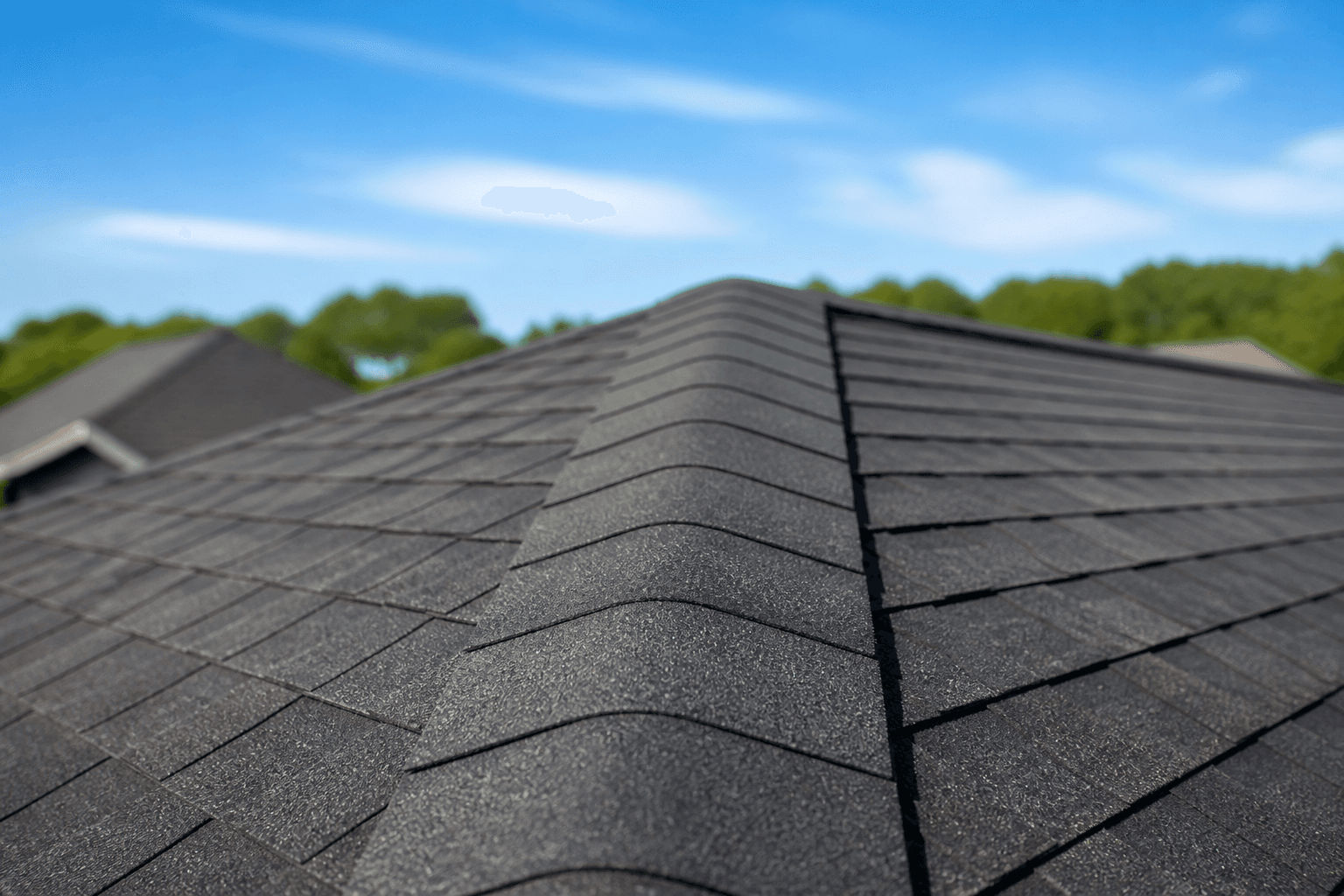
ALVTA Roofing & Construction

Ventilation

The roof breathes too. If it doesn’t, it sweats.

Heat and moisture trapped under the deck shorten shingle life and can wet wood and insulation. The upgrade is not “add a fan.” It is knowing each vent type and balancing intake with exhaust.

The path of the air

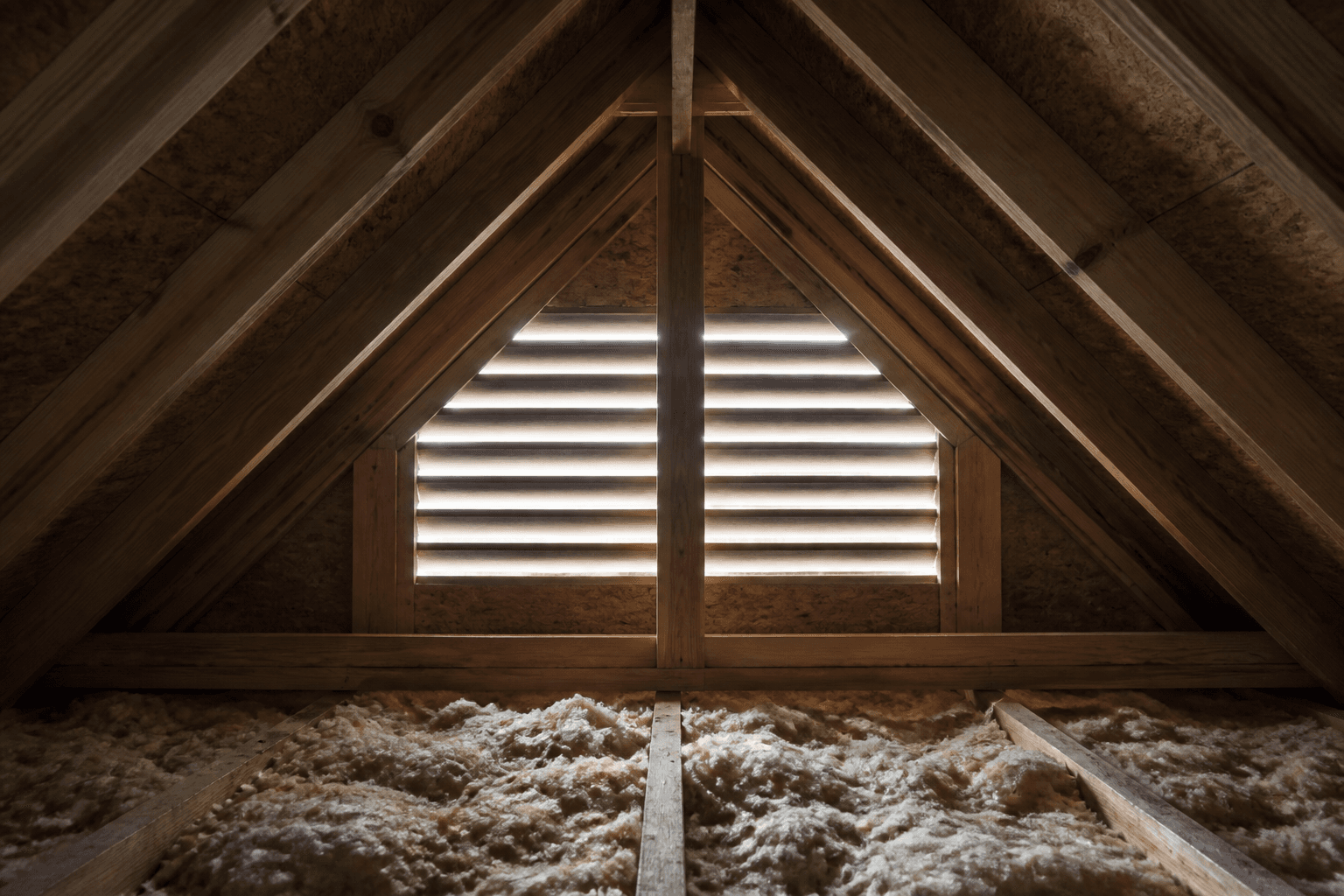
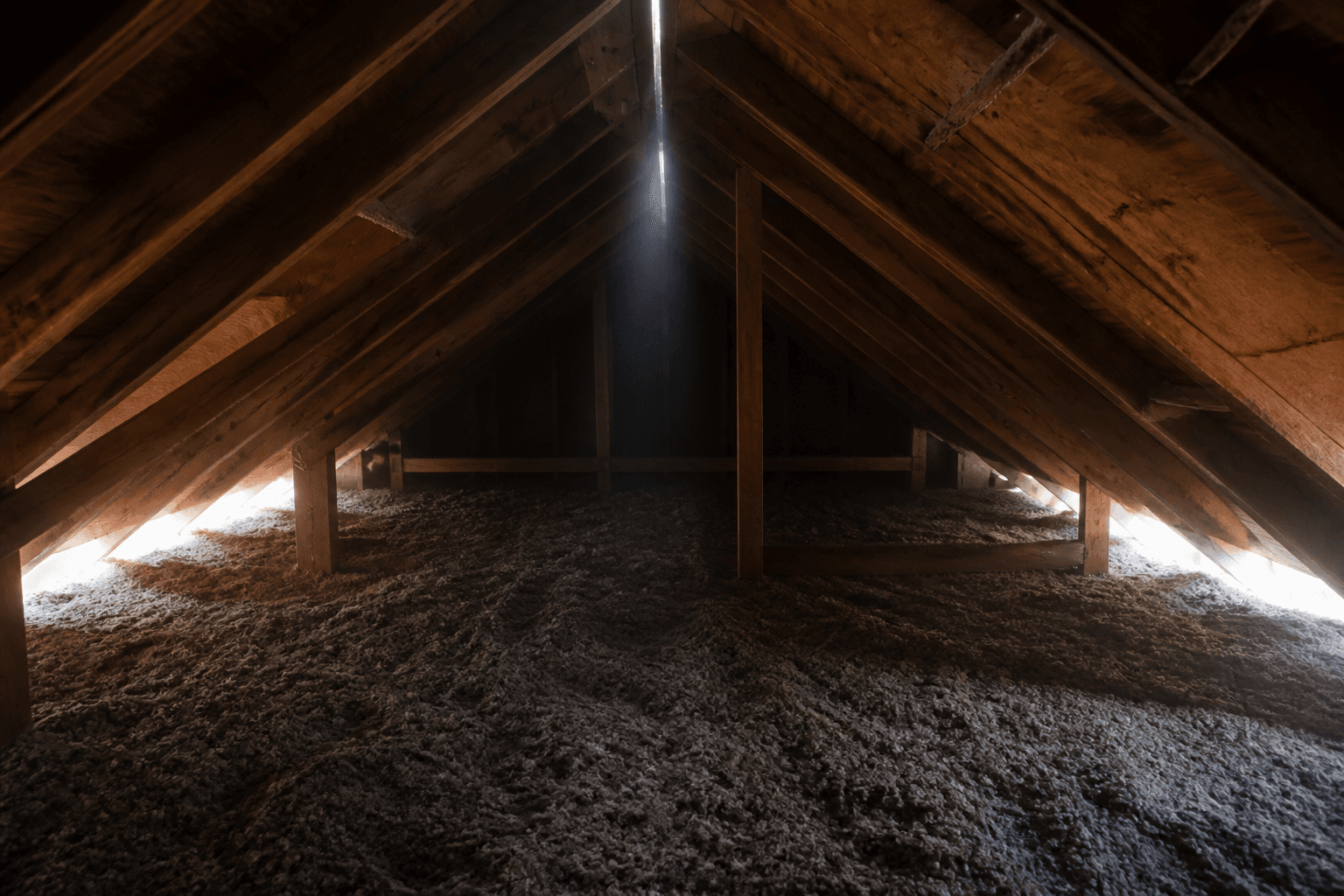
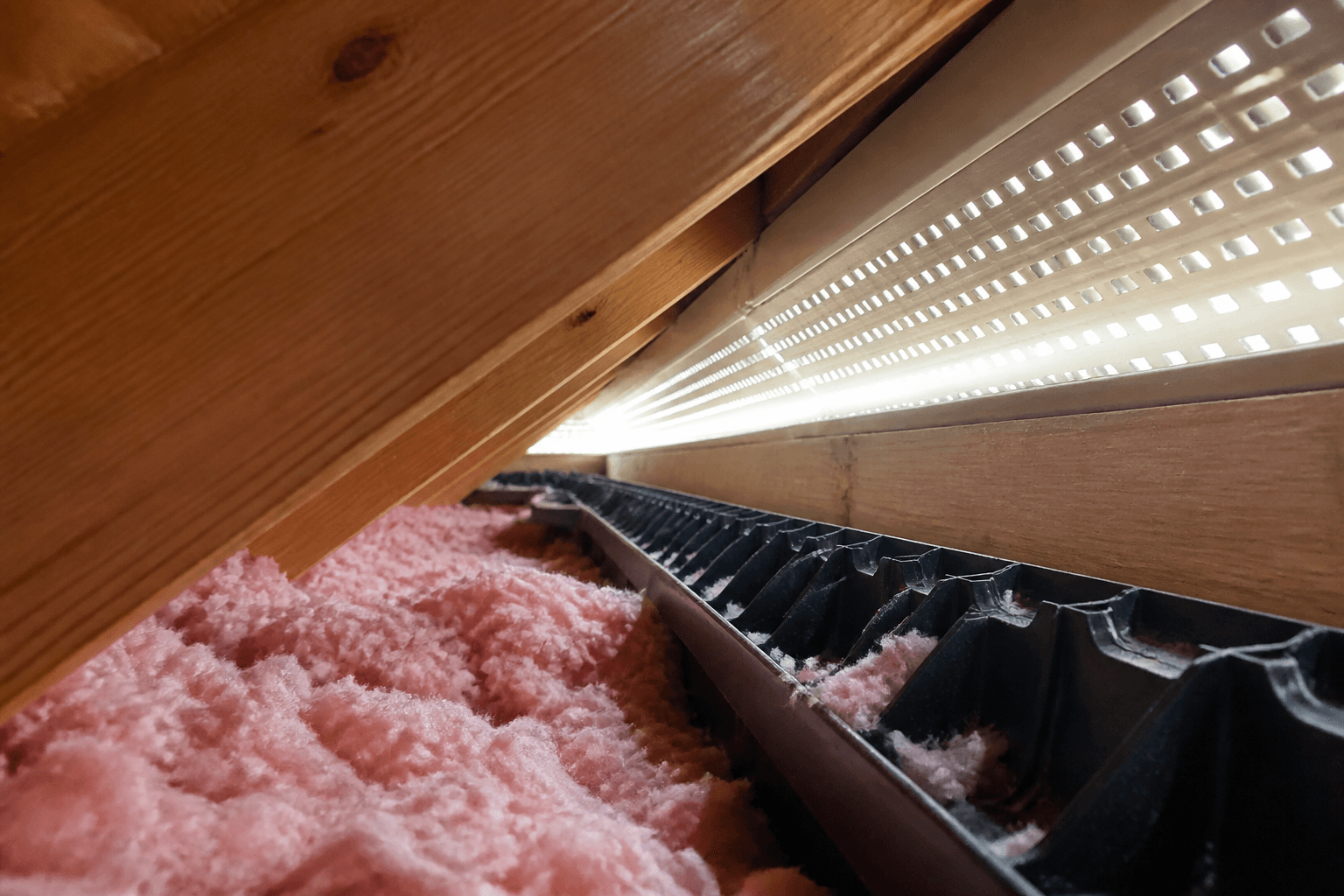
Watch the air on a real attic: in at the eaves, across under the deck, out at the ridge. That loop is what keeps heat and moisture from sitting on the wood.

Attic: light at both eaves and a slit of light at the ridge

01

Inhale · soffit

Cooler air enters under the eave.

02

Across the attic

It travels under the deck, above the insulation.

03

Exhale · ridge

Hot air leaves at the peak.

What the house gains

When this loop is open, the attic stays closer to outdoor temperature. Shingles cook less from below. Moisture has a way out. The rooms underneath take less of that heat — which is the comfort and the bill, not just the roof.

Types

How each vent actually works

Each system with the air moving on a real photo — what it does, and what the house gains if it is the right piece in the right place.

Intake · low

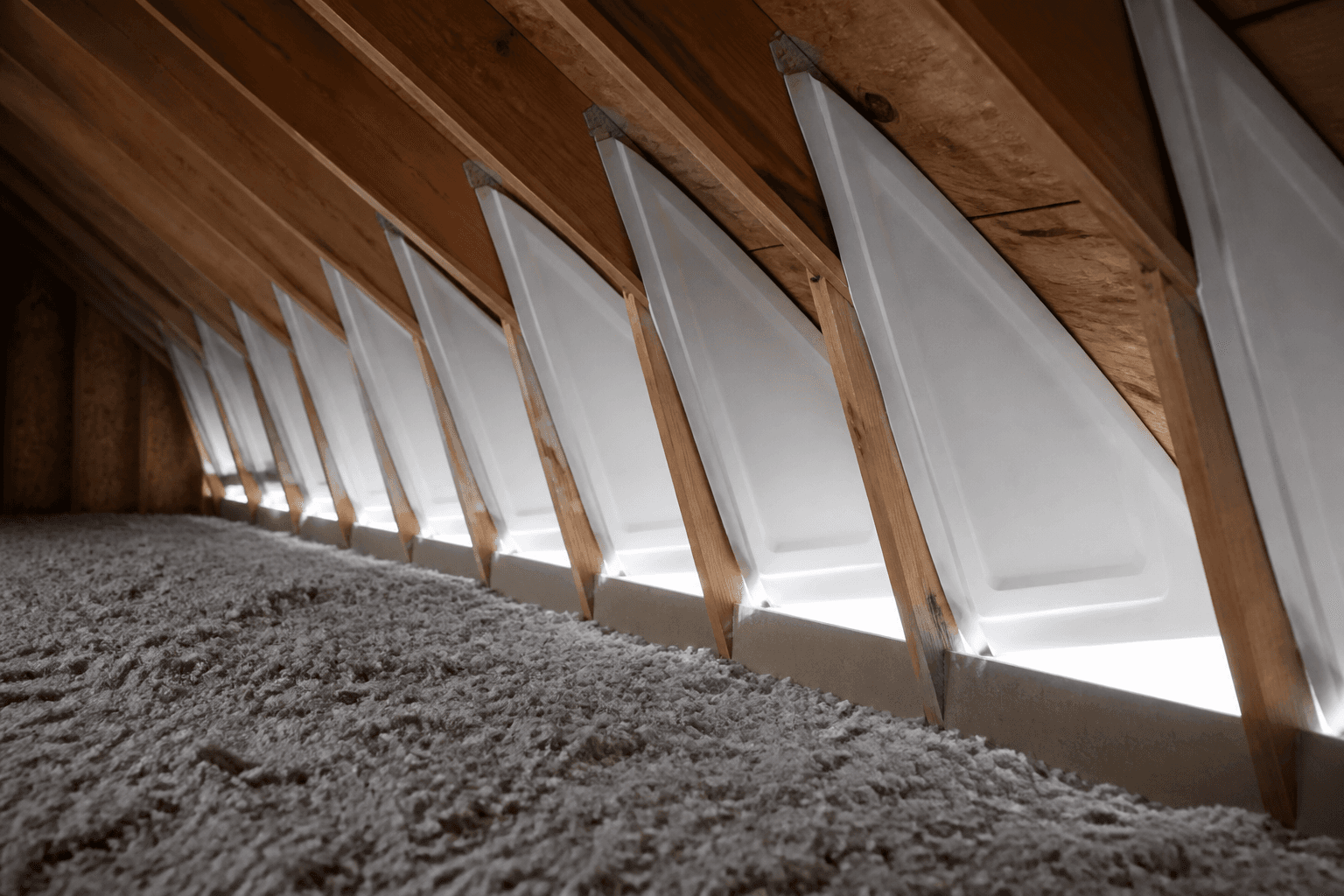
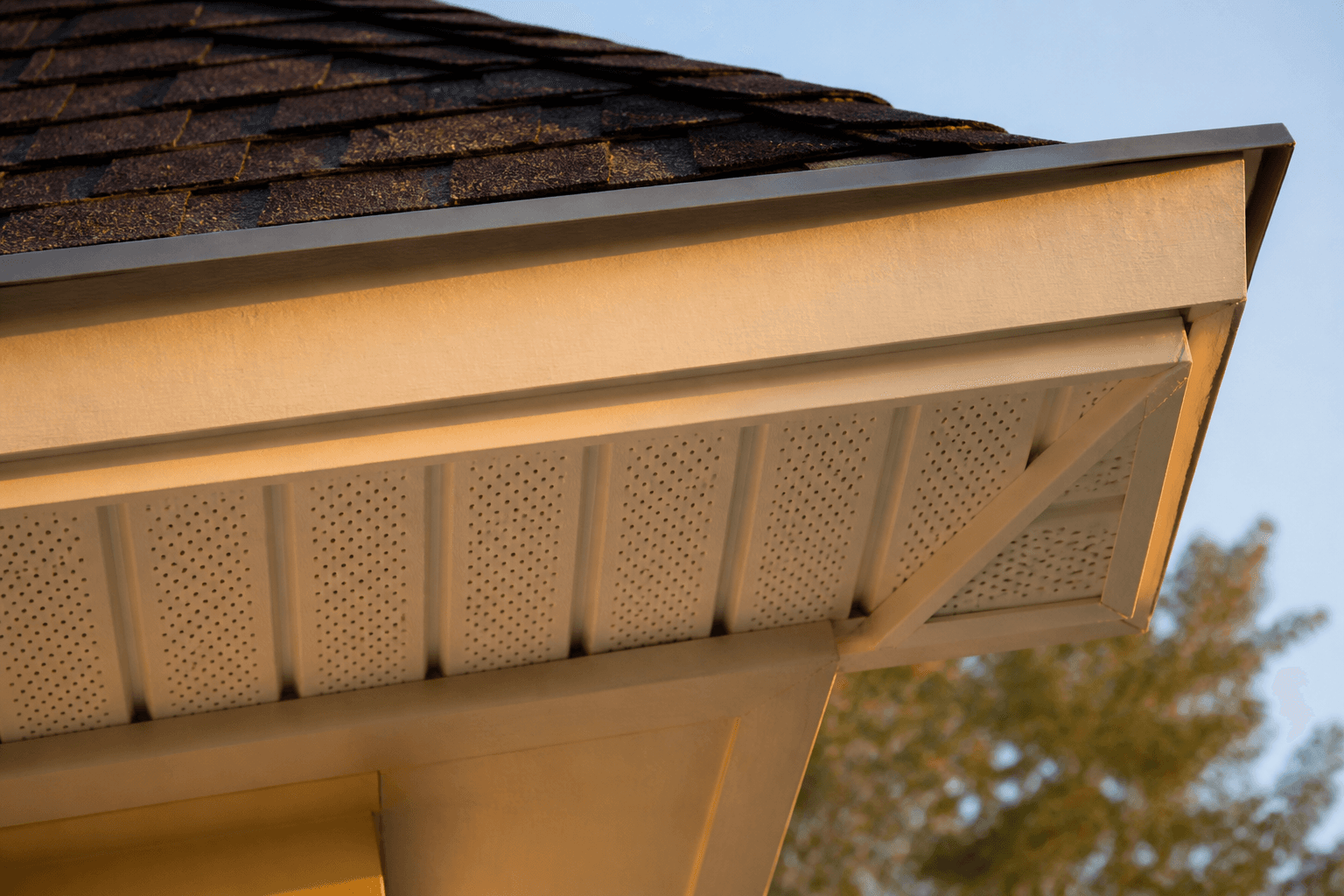
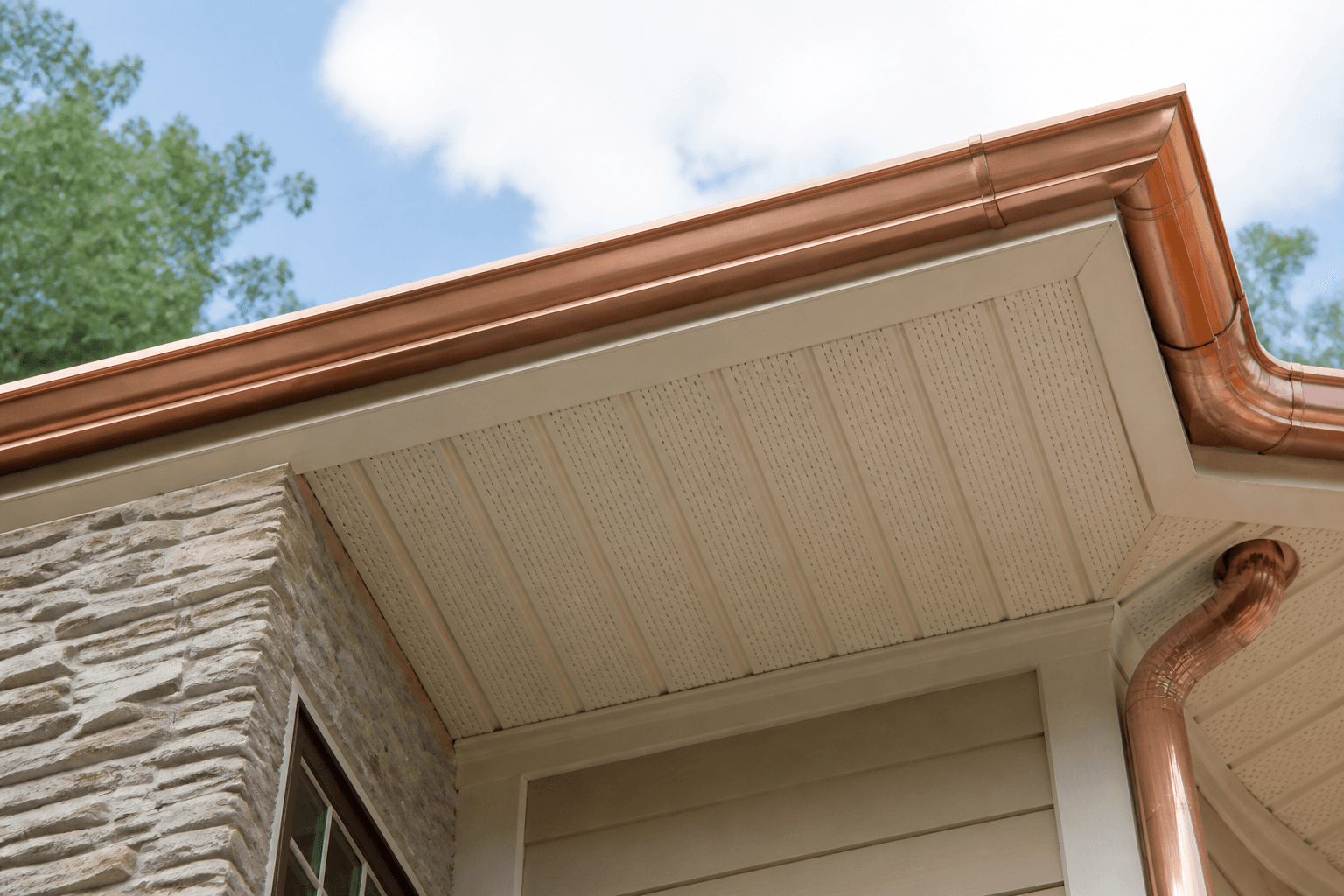
Soffit vents

Pulls cooler outdoor air in at the lowest point of the roof — the inhale.

What you gain

Feeds every exhaust above. A cooler, drier attic. Less heat into the rooms. Shingles bake less from underneath.

If insulation or paint closes those holes, ridge vents and fans start pulling from the house instead — through lights, hatches, and the ceiling.

Watch: blocked soffits after a remodel or a thick insulation job.
Exhaust · high

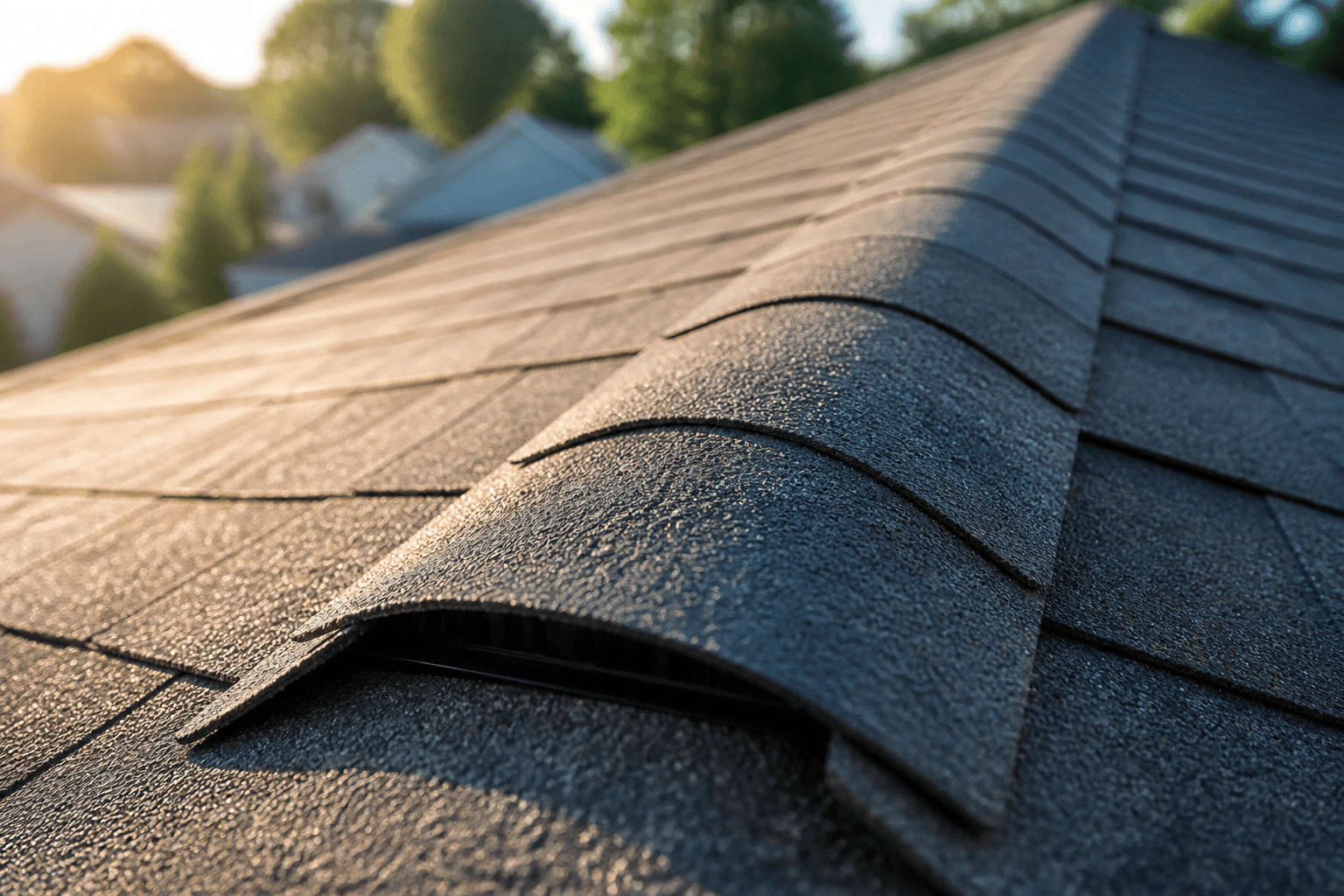
Ridge vent

Lets hot, moist air leave at the highest line of the roof — the exhale.

What you gain

The attic stays closer to outdoor temperature. Less heat dripping into the house. Moisture has a way out before it wets wood.

It only works if intake below is open. A ridge with no soffit, or a ridge fighting gable vents and a fan, leaves dead zones.

Watch: a ridge with no intake, or a ridge fighting gable vents and a fan.

Side opening · mixed

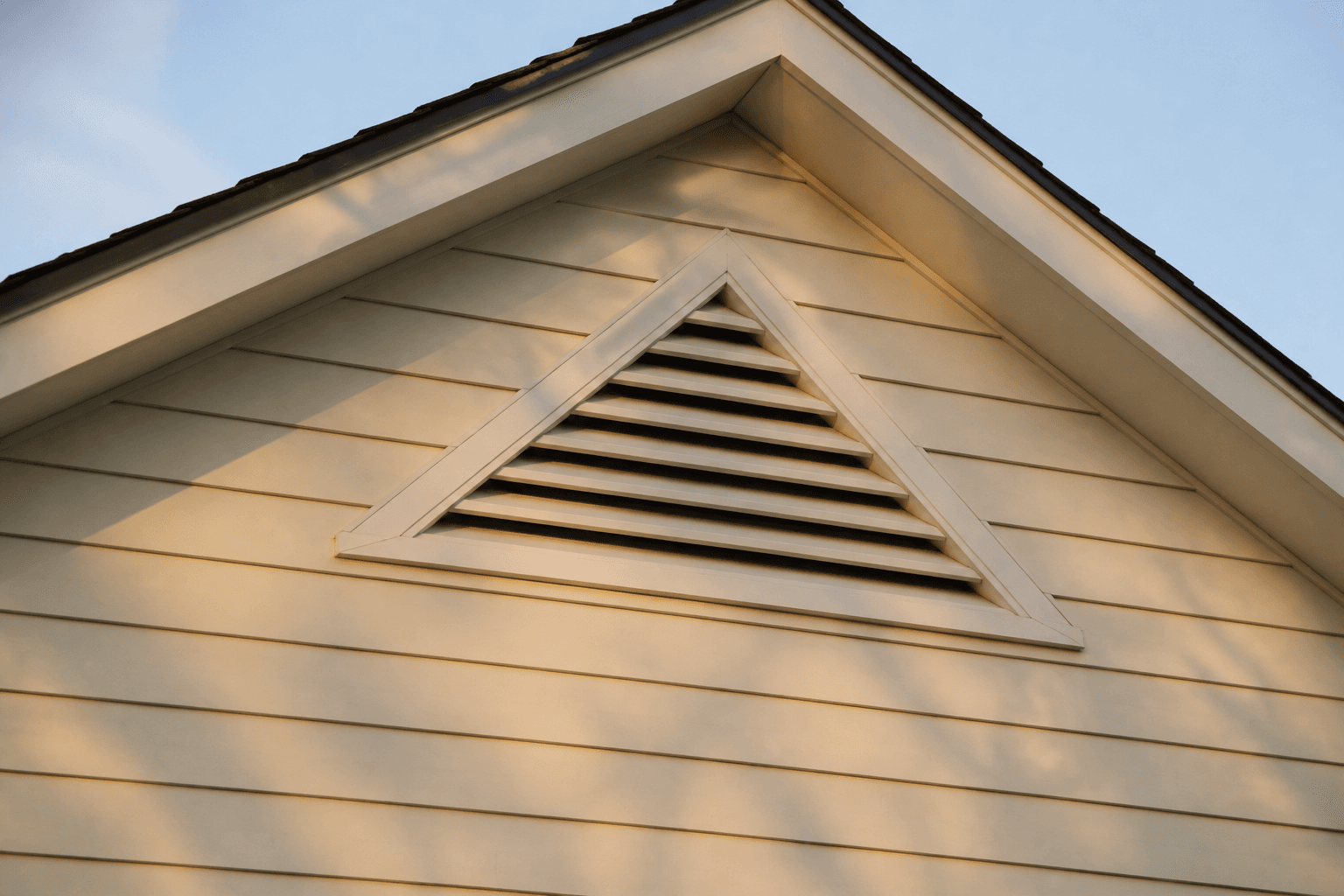
Gable vents

Opens the gable wall so air can enter or leave sideways.

What you gain

Can ventilate a simple attic. On a roof that already has a ridge, air often takes this shortcut and never sweeps the whole space.

Sometimes the upgrade is closing the gable, not adding more exhaust. Air always takes the easiest path.

Watch: gable + ridge in the same attic.

Exhaust · off-ridge

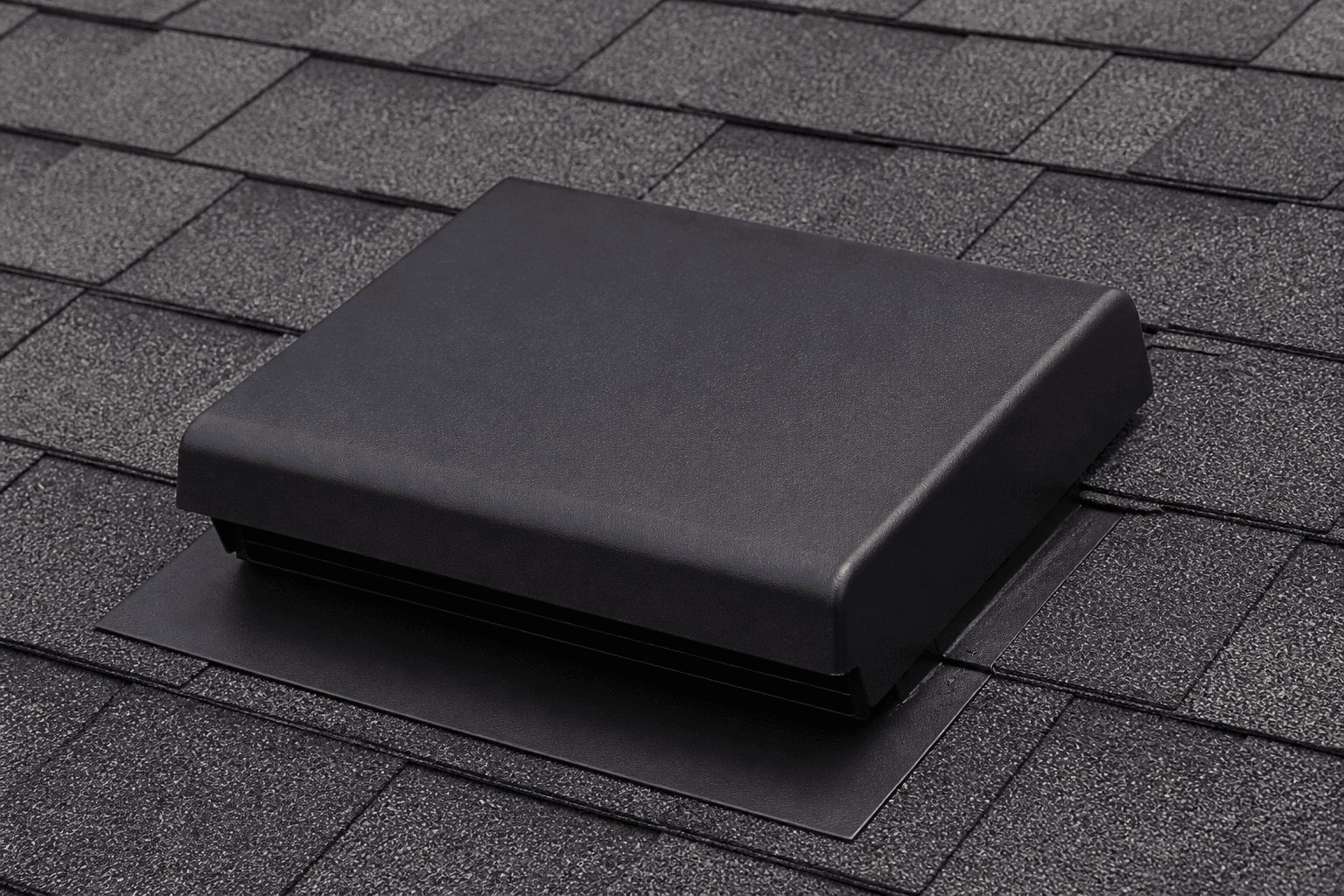
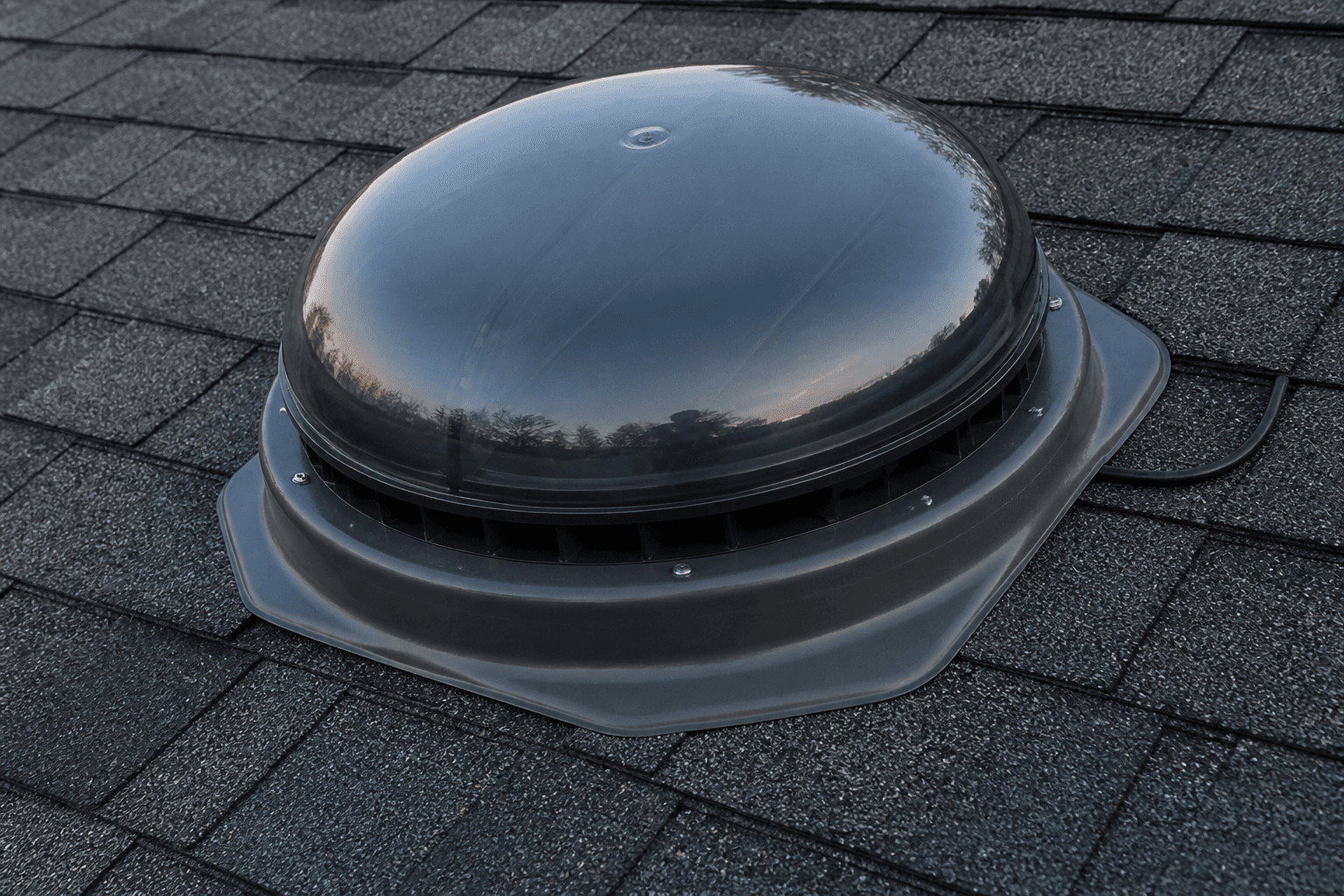
Box / static roof vents

Exhausts a local patch of the roof field — not the whole ridge line.

What you gain

Useful on hips or where a ridge cut is not possible. Each one is another hole to flash and a zone that may stay hot if they are too few or too low.

A scatter can work. They are harder to balance than one continuous ridge, and they add penetrations.

Watch: too few, placed too low, or mixed with a ridge that then does all the work.

Mechanical exhaust

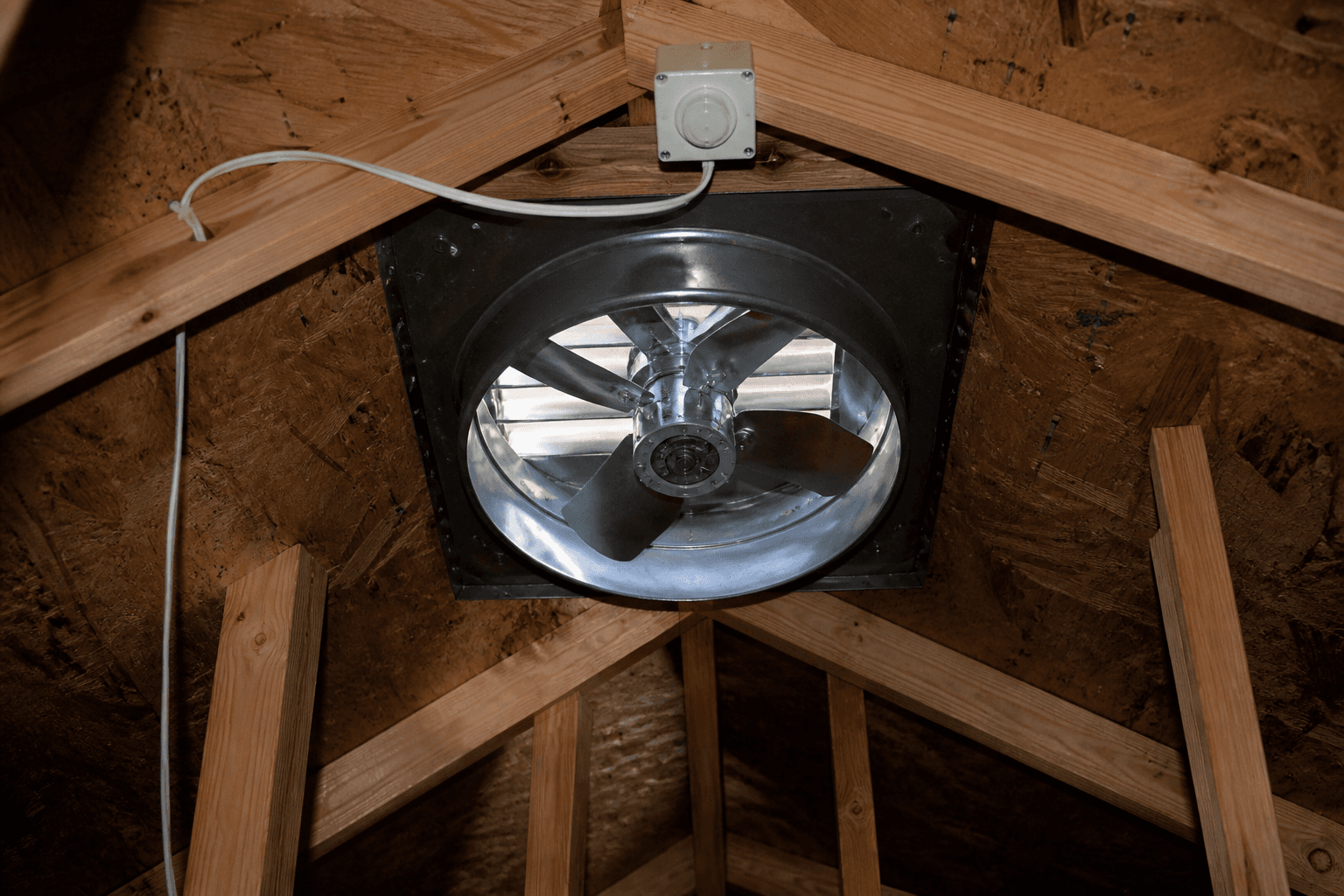
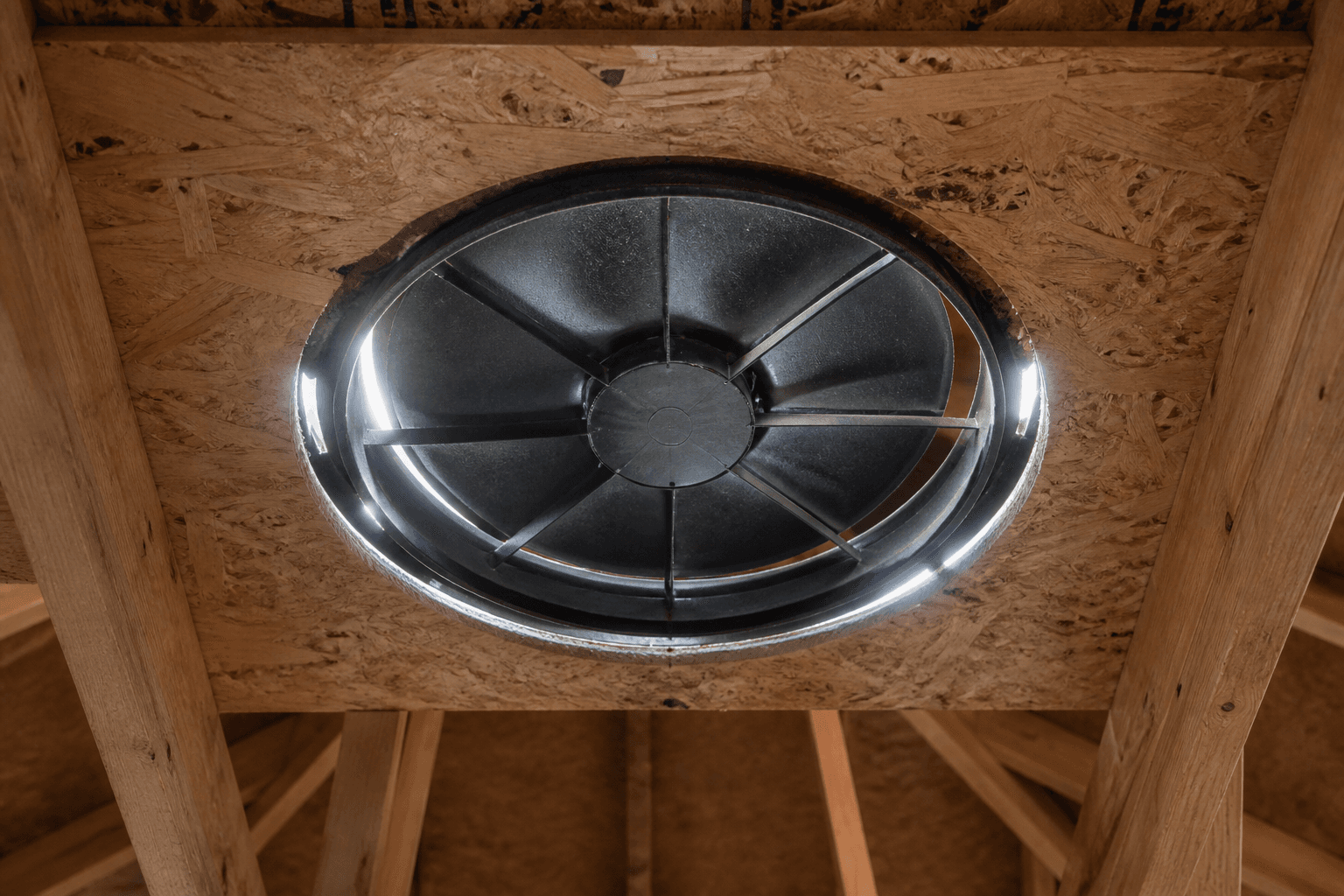
Power attic fan

A motor pulls a large volume of attic air out on a thermostat or switch.

What you gain

Can dump heat fast on a brutal afternoon. Only a gain if soffits are open and the ceiling is reasonably tight — otherwise it can pull your AC into the attic.

Not automatically better than a balanced soffit-and-ridge path. We do not treat these as a default upgrade.

Watch: leaky ceiling, closed soffits, or a fan fighting a ridge.

Mechanical exhaust · sun

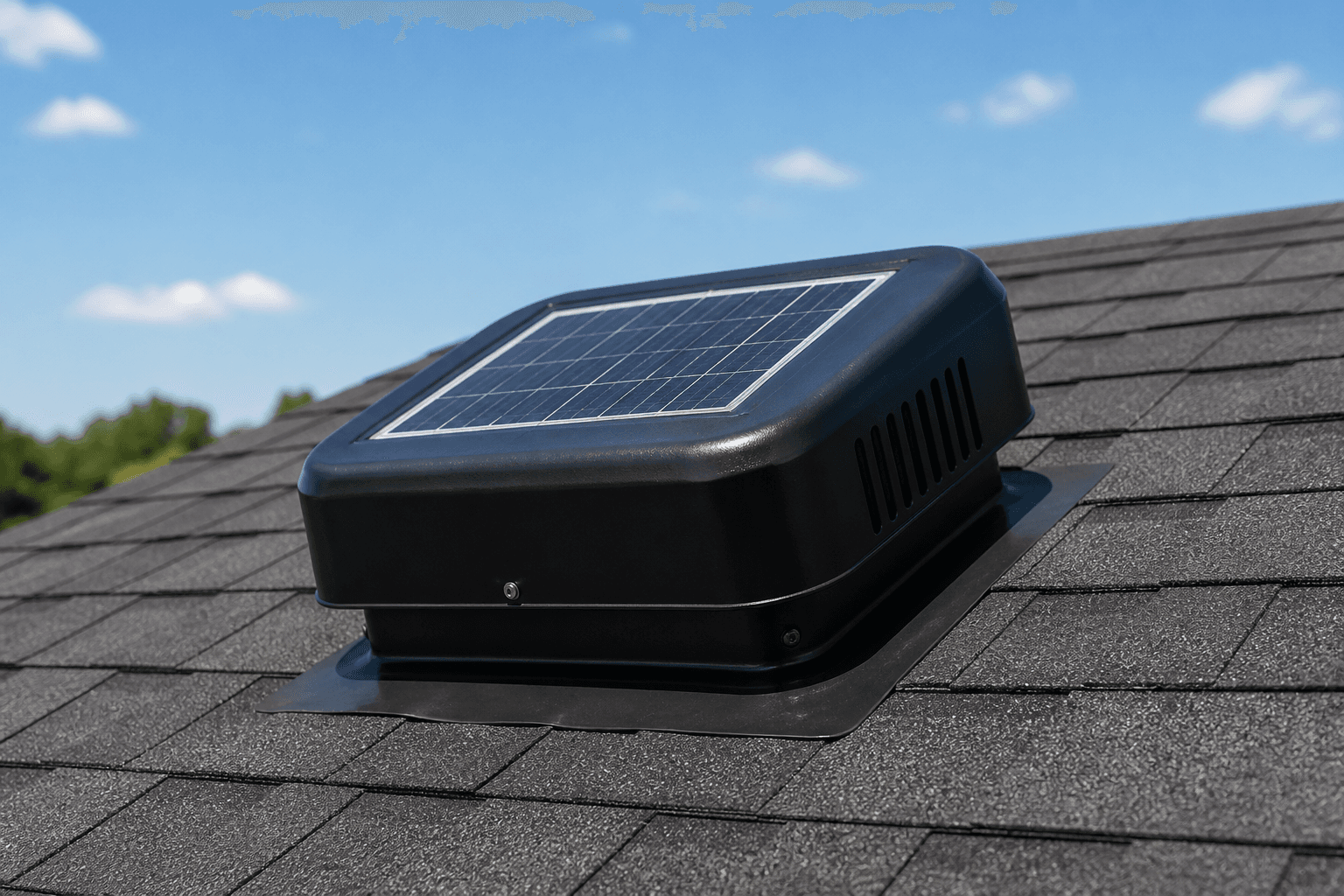
Solar attic fan

Same pull as a power fan, only while the sun is on the panel.

What you gain

Runs when the attic is often hottest, with no house electricity. Same rule: it is not a substitute for open soffits and a planned exhaust.

Set-and-forget solar fans on a roof that already has a ridge and open gables can fight the passive path.

Watch: adding one without checking intake and other exhausts.

Helper · keeps the path open

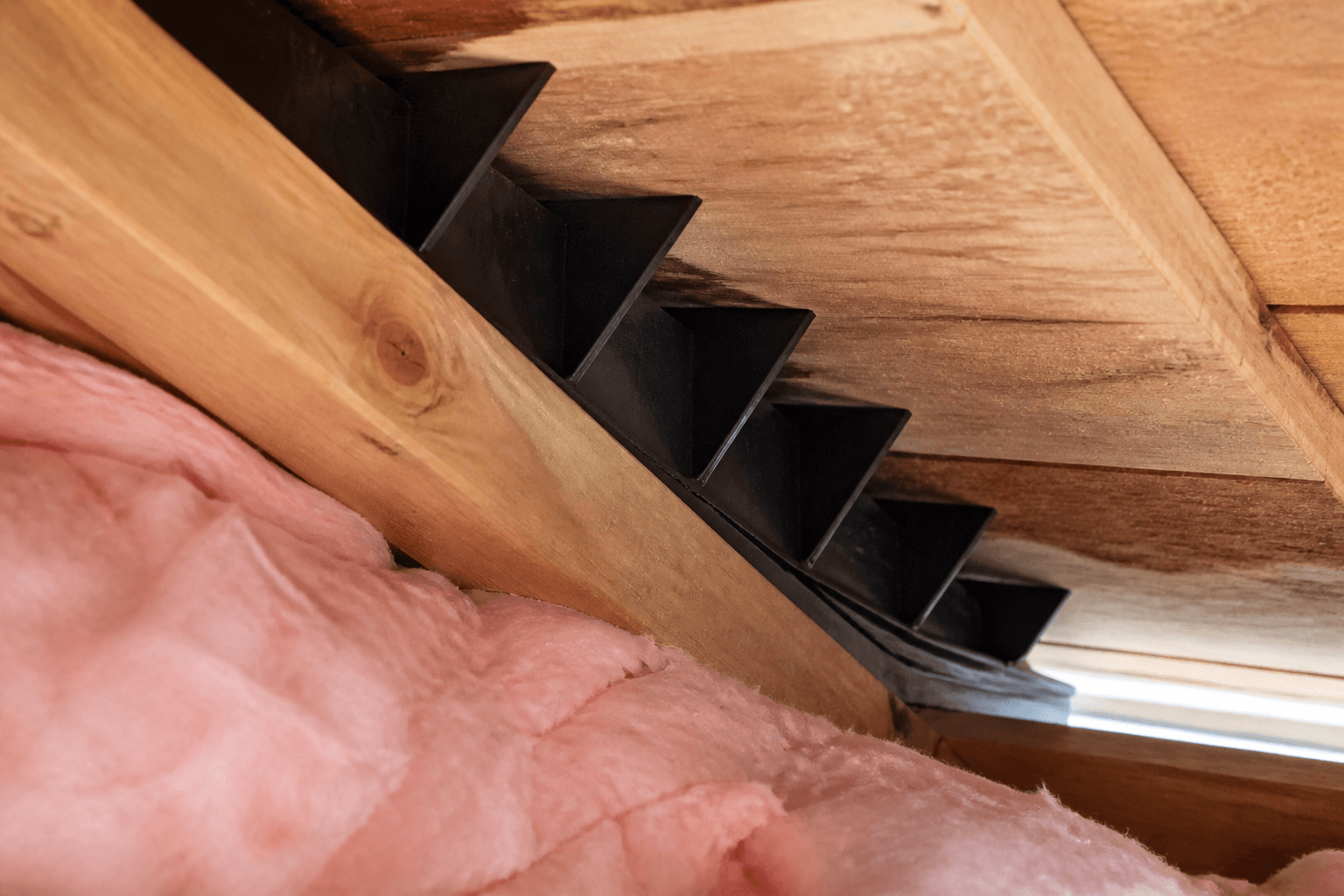
Baffles (rafter vents)

Holds insulation back so the soffit path stays open under the deck.

What you gain

You can add insulation without choking the roof. Intake still works. The attic can still exhale.

Not a vent to the outdoors. Without them, “more insulation” can smother the inhale.

Watch: new insulation blown in without baffles at the eaves.

Upgrades we will actually discuss

Not every option fits every house. A hip roof, a tight attic, or an unvented (conditioned) roof changes the rules. That is seen on site.

Open or restore soffits

Paint, insulation, or later remodels often kill intake. Restoring it is one of the highest-impact upgrades and one of the least visible.

Baffles / rafter vents

Rigid channels that keep an air path from the soffit into the attic even with thick insulation. Without them, “more insulation” can smother the roof.

Continuous ridge vent

Replaces or avoids a scatter of poorly placed mushroom vents. It needs a ridge cut of the right width and a compatible cap. Not every roof geometry takes it the same way.

Review mixed exhausts

Gable vents + ridge + an electric fan in the same attic can fight: air takes the easiest path and leaves dead zones. Sometimes the upgrade is removing or closing an exhaust, not adding one.

Electric or solar fans

They move a lot of air. They are not automatically “better.” If the ceiling plane is not sealed, they can pull conditioned air from the house. If intake is poor, they pull from the wrong places. We evaluate them case by case. We do not sell them as a miracle.

Ceiling-plane sealing

Hatches, lights, duct penetrations. A well-ventilated attic with a leaky ceiling still pulls moisture and energy from the living space. It is part of the system, even if you cannot see it from the street.

Model code, in one paragraph

The International Residential Code (IRC) typically requires a net free ventilating area of at least 1/150 of the vented space, with a common exception to 1/300 when conditions are met (for example, a share of the ventilation high, near the ridge, and the balance at the eaves). That is a framework, not your permit. The inspector in your jurisdiction has the last word. We do not sign for them.

Is the attic choking?

We look from above and, if there is access, from below.